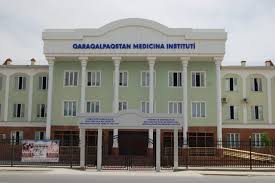
Serves as the head of Nukus medical university and its surrounding hospitals, where Centre 13 operates. The Institute's predecessor, the successor of a branch within Tashkent Pediatric Medical Institute was officially established in as an independent institution in 2020 to respond to increasing demand for health care services. MIK is committed to training the high quality medical specialists, with the combination of scientific investigation and very practical clinical skills.
| Feature | Details |
|---|---|
| University Name | Medical Institute of Karakalpakstan (MIK) |
| University Type | Public/Government (State University) |
| Location | Nukus, Republic of Karakalpakstan, Uzbekistan |
| Medium of Education | English (Also available in Russian and Uzbek) |
| University Recognition | WHO, NMC (India), FAIMER, WDOMS |
| Entrance Exam | NEET (for Indian students) required for Indian recognition |
| Founded Year | 1991 (Reorganized as independent institute in 2020) |
| Popular Course | General Medicine (MBBS / MD) |
| Ranking in Country | Leading Public Medical Institution |
| World Ranking | Globally recognized by major medical bodies |
Medical Institute of Karakalpakstan is a great option for foreign students especially those from India and here are the following reasons why:
| Particulars | Year 1 | Year 2 | Year 3 | Year 4 | Year 5 | Year 6 |
|---|---|---|---|---|---|---|
| Tuition Fee | 3850 USD | 3850 USD | 3850 USD | 3850 USD | 3850 USD | 3850 USD |
| Hostel Fee | 600 USD | 600 USD | 600 USD | 600 USD | 600 USD | 600 USD |
Hostel Facility: MIK strives to provide good quality, safe and well furnished residential accommodation for its students. Rooms at the dormitory are a combination of modern furnishings and practical facilities. You will have continuous normal services, such as 24 hour electricity, hot and cold water (with heating), maintained by the service company.
Security: A state-of-the-art 24/7 security system patrolling the new campus and hostel areas with round the clock dedicated team of security personnel in combination with comprehensive CCTV network create a safe environment for students.
Mess System: The hostels are equipped with a separate mess who serves clean, delicious food. Expl: special indian food is generally served both veg and non-veg to meet the Indian student requirements.
Separate Hostels: there is a commitment to offer safe and secure staying atmosphere, so UPES does have separate hostel facility for male female students.
Other facilities: Hygiene and cleanliness are priorities. Amenities at the university include common kitchens, laundry is available on-site and there are new facilities for a range of indoor and outdoor sports and recreation.
Academic Resources:The Faculty is equipped with leading edge academic resources including modern simulation centers, a big scientific medical library which contains about 300,000 literature titles in stock, comprehensive digital learning platforms - to offer students the best practical training available.
Activities: The students are motivated for engaging university clubs, research groups and academic competitions to encourage leadership and teamwork. There are various social and cultural activities organised in order to ensure that students have a healthy study-life balance.
Facility: MIK is developing a contemporary, safe,research-oriented and very progressive learning environment. State-of-the-art security measures are adopted to ensure the campus is secure and running smoothly.
Student Mentoring: Experienced foreign and local faculty members serve as mentors, ensuring the students a smooth and successful journey through their challenging medical education. A committed student support team means international students are offered on-going assistance with all administrative and welfare issues.
Medical Programs: General Medicine program is established based on international best practices and early clinical integration that enable students to challenge the global medical issues. Hands-on experience is provided through the university network of hospitals so students can develop sophisticated clinical reasoning skills.
Service: Students are encouraged to become involved in public health campaigns and community outreach programs, laying solid foundations for not only sense of social responsibility but also ethical medical practice.