
Published at : 2026-04-21 06:41:00 | Views: 2,390
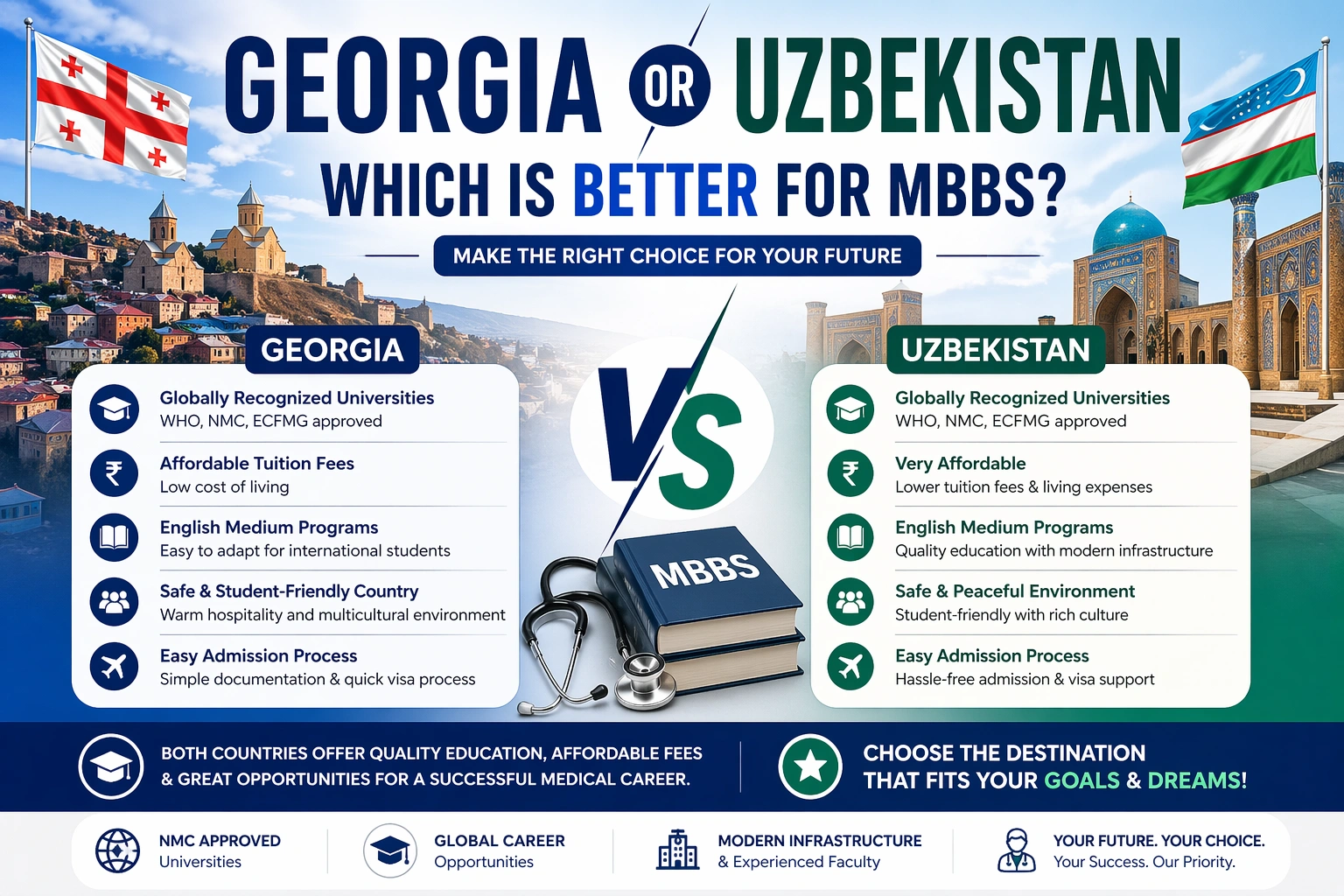
While Indian students opt for MBBS abroad, selecting a country is an important step. Georgia and Uzbekistan are some of the most sought after choices right now. Affordable medical education, globally accepted degrees, and modern infrastructure are provided by both countries. Choosing which one is better comes down to the cost, quality of education, clinical exposure and future opportunities.
This detailed contrast of MBBS in Georgia vs. MBBS in Uzbekistan will ensure that you make an appropriate decision about which one to choose.
Georgia has a relatively inexpensive education system that meets European standards. Georgia Medical Universities adhere to international teaching formats with emphasis on clinical exposure, hands-on training, and research work from the first year.
While Uzbekistan is experiencing rapid improvements in its medical education system in recent years. Although universities are upgrading infrastructure and introducing modern teaching methods, the overall academic ecosystem is still developing compared to Georgia.
Consequently, universities in both countries are recognized by the World Health Organization and listed in the World Directory of Medical Schools, which lends international credibility to degrees.
Which is better: Georgia offers stronger academic structure and global exposure.
The very first thing that attracts students towards MBBS abroad is affordability.
Georgia: Tuition fees are slightly higher, ranging from ₹4–7 lakhs per annum. Living costs are moderate.
Uzbekistan: Tuition fees are lower, starting from ₹2–4 lakhs per annum. Cost of living is also low.
If budget is your primary concern, Uzbekistan becomes an attractive option.
Bottom Line: Uzbekistan is more budget-friendly.
Clinical exposure is crucial in shaping a medical student’s career.
Georgia: Strong hospital tie-ups, early patient interaction, modern labs, and advanced medical technology.
Uzbekistan: Improving clinical exposure, but still catching up in terms of advanced facilities.
Conclusion: Georgia provides better real-world medical training.
Indian students must ensure recognition from the National Medical Commission.
Universities in both countries are NMC-compliant, allowing students to appear for licensing exams like FMGE/NExT in India.
Additionally, global recognition is supported through listings in WHO and WDOMS.
Verdict: Recognition is similar; university selection matters more.
Georgia: English-medium programs are widely available, making it easier for Indian students to adapt.
Uzbekistan: English programs exist, but daily communication may involve Uzbek or Russian.
Georgia also offers a more European lifestyle and student-friendly environment.
Verdict: Both are manageable, but Georgia is more comfortable overall.
FMGE/NExT success largely depends on education quality.
Students from Georgia generally show better FMGE passing rates due to stronger academic systems and clinical exposure compared to Uzbekistan.
Result: Georgia performs better in licensing outcomes.
Georgia: Better international connectivity and smoother visa processes.
Uzbekistan: Closer to India, making travel easier and quicker.
Verdict: Both are accessible, Uzbekistan is slightly nearer.
Factor | Georgia | Uzbekistan |
Education Quality | High | Moderate |
Fees | Higher | Lower |
Clinical Exposure | Strong | Improving |
FMGE Success | Better | Average |
Living Environment | European | Developing |
Affordability | Moderate | Very Affordable |
If you are looking for quality education, better clinical exposure, and stronger career opportunities, Georgia is the better option.
If your priority is low cost and affordability, Uzbekistan is a good choice.
Simple Rule:
Georgia: For quality education and career growth
Uzbekistan: For budget-friendly education
The best choice depends on your budget, career goals, and preferred learning environment.
Always ensure your chosen university is approved by the National Medical Commission and listed in the World Directory of Medical Schools for global recognition.
The decision you make today will shape your entire medical career tomorrow.