
Published at : 2026-06-02 18:01:00 | Views: 2,108
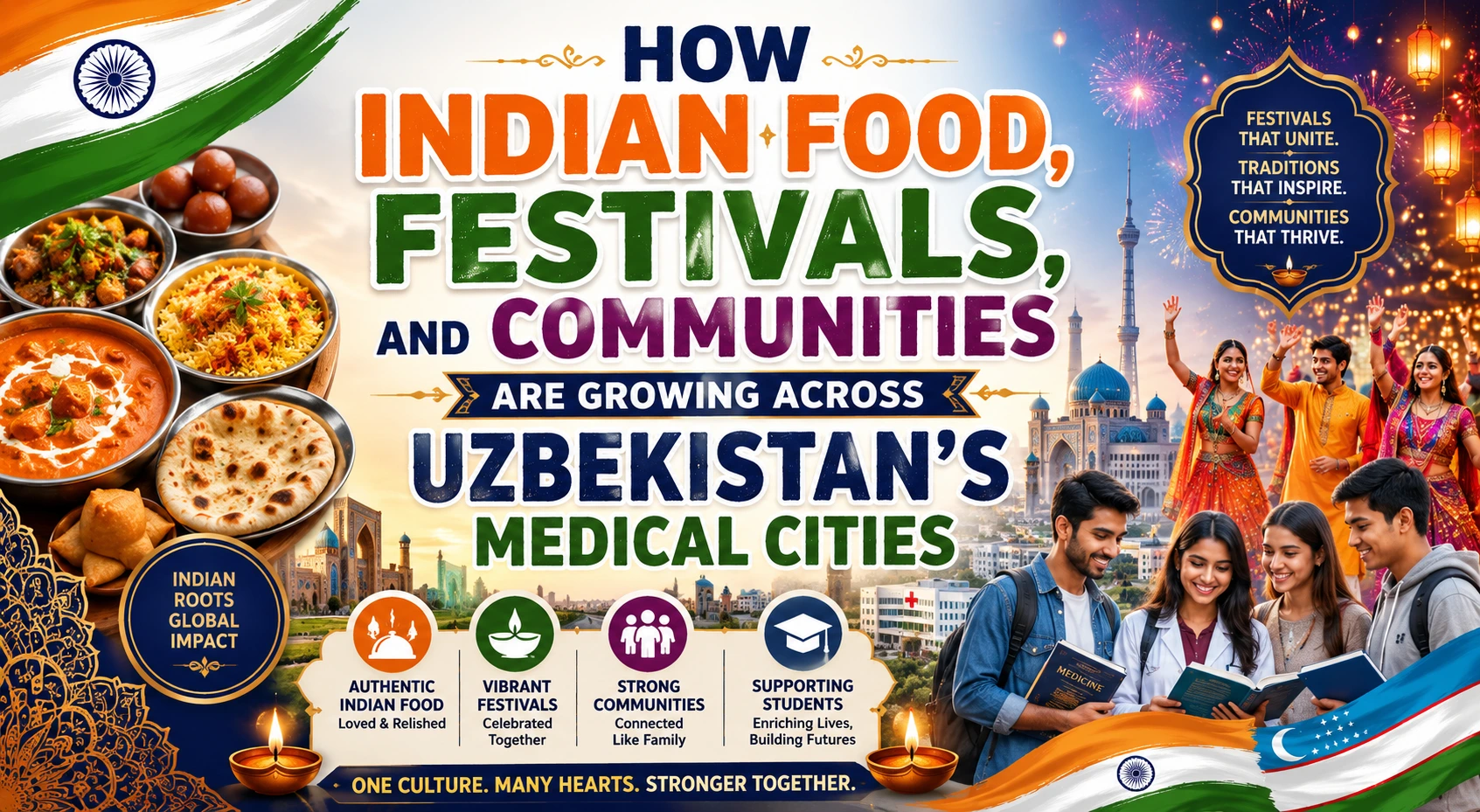
In current years, Uzbekistan has emerged as one of the quickest-developing locations for Indian students pursuing NEET MBBS abroad. Beyond teachers and inexpensive lessons, what without a doubt defines pupil existence inside the country is something deeper—the fast upward thrust of Indian meals options, cultural celebrations, and tightly related student groups in cities like Tashkent, Samarkand, and Bukhara.
This boom isn't unintentional. It is the end result of a steadily increasing Indian pupil populace, increasing university infrastructure, and a robust demand for cultural familiarity in an overseas land. These days, Uzbekistan isn't always just a take a look at a destination—it's miles turning into a second home for heaps of Indian scientific aspirants.
The upward thrust of Indian groups in Uzbekistan is directly related to the surge in MBBS admissions over the last few years. Hundreds of Indian students at the moment are enrolled across medical universities within the U.S., in particular in essential cities like Tashkent and Samarkand.
As scholar numbers growth, herbal communities begin to form:
Hostel-based totally Indian pupil agencies
university-level cultural institutions
informal observe circles for MBBS subjects
nearby WhatsApp and social networks for aid
These groups play an essential position in assisting new students adjust quickly. From airport pickup steerage to exam training tips, seniors regularly act as mentors for juniors, making the transition smoother.
Food is one of the biggest issues for Indian students going abroad. however, Uzbekistan has made enormous development in addressing this want due to rising demand from Indian medical college students.
Most clinical universities and private hostels now provide Indian mess services. these centers normally provide:
Dal, rice, and roti
Vegetable curries and paneer dishes
Egg and hen alternatives
Tea and simple Indian breakfast gadgets
This has substantially decreased homesickness and nutritional pressure for college students, specially at some stage in the initial months of settling in.
Indian eating places are gradually increasing in foremost student hubs like Tashkent. Many are run with the aid of Indian entrepreneurs or nearby chefs skilled in Indian cooking patterns.
popular dishes consist of:
Biryani and pulao
Butter hen and paneer butter masala
Samosas, pakoras, and chaat-fashion snacks
Masala chai and road-style tea stalls
Those restaurants are more than simply food outlets—they are social spaces wherein students gather, have fun, and unwind after a long look at classes.
Another most important improvement is the supply of Indian grocery merchandise in towns like Tashkent and Samarkand. College students can now easily discover:
Indian spices (turmeric, garam masala, chili powder)
Pulses like moong, chana, and masoor dal
immediately noodles and packaged snacks
Pickles and geared up-to-prepare dinner mixes
This allows college students to cook their very own food, giving them flexibility and a sense of familiarity.
One of the most heartwarming elements of Indian pupil life in Uzbekistan is the way fairs are celebrated with enthusiasm and unity.
Diwali celebrations are extensively prepared in scholar hostels. Rooms are embellished with lighting, students alternate chocolates, and cultural performances are arranged inside campuses.
Holi is every other major party among Indian students. Groups gather in open spaces to play with colors, dance to Indian music, and experience festive meals.
Indian Independence Day (15 August) and Republic Day (26 January) are celebrated with flag hoisting ceremonies, speeches, and cultural performances (NMC).
Due to the fact Indian college students come from extraordinary states, gala's like Navratri, Eid, Pongal, and Onam are also celebrated inside communities.
Indian student associations in Uzbekistan play a key role in maintaining cultural identity. These organizations often arrange:
festival celebrations
Welcome events for new students
academic support sessions
sports and cultural competitions
Emergency assistance networks
They also act as a bridge among college students and university management, helping resolve problems related to accommodation, academics, and local integration.
In cities like Samarkand and Bukhara, in which student populations are smaller compared to Tashkent, these institutions become even more important in building a sense of unity (WDOMS).
Local communities in Uzbekistan have become increasingly familiar with Indian culture. Many now:
understand Indian festivals
enjoy Indian cuisine
work in Indian student service sectors
interact regularly with Indian student groups
This cultural acceptance has made life easier and safer for international students (WHO).
At the same time, Indian students are also adapting to Uzbek culture by means of:
getting to know basic Russian or Uzbek terms
trying local dishes like plov and samsa
Respecting local customs and traditions
participating in university cultural events
Even though MBBS is academically demanding, students in Uzbekistan maintain a healthy social life. Popular activities include:
Cricket and football matches between hostel groups
Weekend trips inside cities like Tashkent and Samarkand
movie nights featuring Bollywood films
Café hangouts and group study sessions
Birthday celebrations and cultural evenings
These activities help students maintain balance between academics and mental well-being.
For students studying medicine abroad, success isn't always just about academics—it additionally depends on emotional stability and cultural comfort.
The growing Indian atmosphere in Uzbekistan offers:
familiar food and lifestyle options
strong peer support networks
reduced homesickness
better academic focus
improved mental well-being
Students exploring study options can research more programs through resources like MBBS in Uzbekistan.
The Indian community in Uzbekistan is expected to grow even further in the coming years. This may likely lead to:
more Indian restaurants and mess centers
larger student communities across universities
increased cultural events and festivals
stronger India-Uzbekistan academic ties
better student support infrastructure
As cities like Tashkent, Samarkand, and Bukhara continue to attract more students, they are gradually evolving into global education hubs with strong Indian cultural presence.
The growth of Indian food, festivals, and communities across Uzbekistan’s clinical cities represents a powerful transformation in worldwide education. What turned into as soon as considered a difficult overseas environment has now emerged as a culturally familiar and supportive ecosystem for Indian students.
From enjoying a plate of dal in a hostel mess in Tashkent to celebrating Diwali with hundreds of peers in Samarkand, students are building a life that feels both global and deeply connected to home.
As Uzbekistan continues to rise as a preferred MBBS destination, its Indian communities will remain at the heart of this journey—making medical education abroad not just achievable, but also comfortable and enriching.