
Published at : 2026-06-02 18:13:00 | Views: 2,007
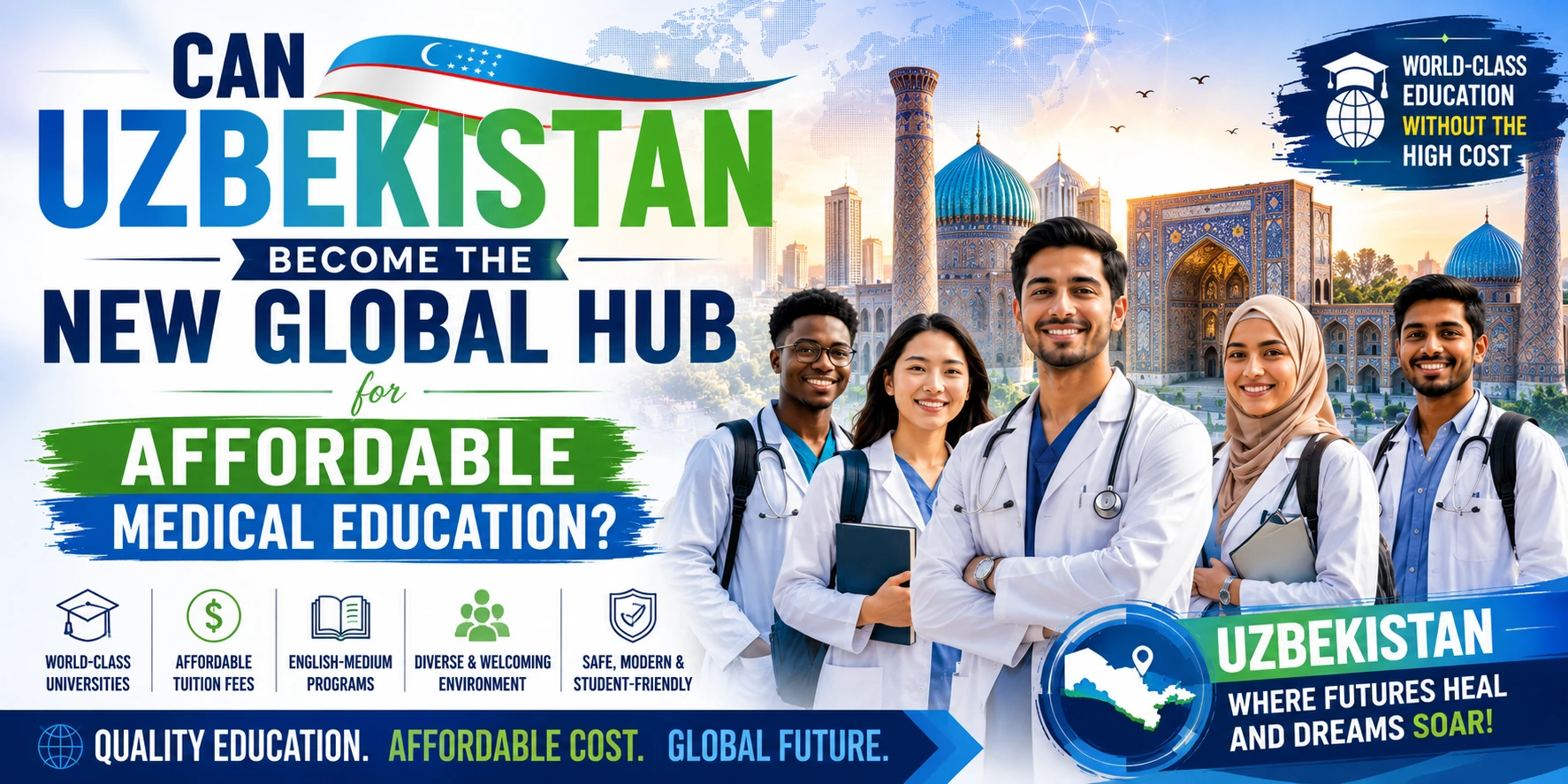
The worldwide call for medical education is growing faster than ever, however the variety of low priced, high-quality seats has not multiplied at the identical pace. This imbalance has pushed heaps of students—especially from countries like India, Africa, and components of Asia—to explore studying medicinal drugs overseas.
On this changing panorama, Uzbekistan is emerging as a serious contender. What turned into once considered a “new alternative” is now being discussed as an ability destiny hub for inexpensive MBBS training. However can it genuinely reach that stage?
To answer that, we need to examine past advertising claims and examine real academic trends, infrastructure boom, scholar inflow, and long-term sustainability.
scientific training international is beneath pressure because of 3 main factors:
increasing scholar demand for MBBS seats
extremely high cost of private medical education in many countries
limited expansion of government medical seats
This has created a global “education gap,” wherein many deserving college students cannot come up with the money for or get admission to scientific training in their home international locations.
As a result, countries providing affordable, English-medium medical education have become more and more attractive. Uzbekistan fits into this category and is steadily gaining attention as a viable solution.
students often start their studies through platforms like MBBS in Uzbekistan, which give structured guidance on universities, eligibility, and living conditions.
Uzbekistan’s rise isn't always unintended. It is built on numerous structural advantages that align with global student needs.
The most powerful factor is affordability. As compared to Western countries and private establishments in India, Uzbekistan gives MBBS programs at a fraction of the cost.
This consists of:
lower tuition costs
affordable hostel accommodation
reasonable living costs
No heavy donation or capitation structure
For middle-class families, this financial accessibility is often the deciding factor.
Language was once a major barrier in Central Asian medical education. However, Uzbekistan has made giant developments by increasing English-medium MBBS applications.
This shift has:
reduced dependency on local languages
improved classroom accessibility for foreign students
increased international enrollment
made learning more standardized
As English instruction becomes more consistent, Uzbekistan becomes more globally competitive.
A key indicator of international education potential is student diversity. Uzbekistan now hosts students from:
India
Nepal
African countries
Middle Eastern countries
This diversity is transforming classrooms into multicultural learning environments, which is crucial for modern medical education.
a country cannot become a global education hub without strong infrastructure. Uzbekistan is actively investing in:
modern medical laboratories
digital learning platforms
simulation-based training systems
teaching hospitals with improved patient access
These improvements are essential for producing doctors who are clinically competent, not just theoretically strong.
For Uzbekistan to become a real global hub, recognition of its medical degrees is critical. Progress is already visible through inclusion in international medical frameworks such as:
World Health Organization (WHO)
World Directory of Medical Schools (WDOMS)
National Medical Commission (NMC)
these recognitions matter because they determine whether graduates can:
appear for licensing examinations
practice in their home countries
pursue postgraduate studies abroad
without such recognition, global expansion would not be possible.
affordable education on my own is not sufficient. a true medical hub ought to make certain sturdy clinical exposure.
Uzbek universities are regularly enhancing this area by way of:
increasing hospital-based training
encouraging early patient interaction
introducing structured internship applications
using simulation labs for skill development
However, consistency still varies across institutions, which is an area that needs further improvement.
Another crucial issue assisting Uzbekistan’s upward thrust is the development in student life.
international students now experience:
dedicated support offices in universities
availability of Indian food and mess facilities
hostel-based student communities
peer mentoring systems
cultural adaptation support
These factors are crucial because student satisfaction directly affects retention and reputation.
When students feel comfortable, they are more likely to recommend the destination to others, creating a natural growth cycle.
Unlike many traditional education destinations, Uzbekistan is seeing strong cultural integration between local and international communities.
This consists of:
shared festivals and cultural events
increasing acceptance of Indian food and traditions
student participation in local activities
developing social interaction among communities
Such integration makes the country more welcoming and reduces cultural isolation for foreign students.
despite rapid development, Uzbekistan still faces key challenges before becoming a global medical hub:
Some universities are more developed than others, leading to inconsistency in teaching quality.
hospital training may still require knowledge of local languages in some areas.
compared to established medical hubs, research publications and innovation ecosystems are still developing.
students preparing for FMGE/next often rely heavily on self-study and external coaching.
These challenges do not weaken Uzbekistan’s progress, but they highlight areas that need long-term focus.
when compared to other popular MBBS destinations:
Russia: strong academic legacy but higher adaptation challenges
China: advanced infrastructure but language complexity
Georgia: European alignment but higher cost
India (private): high fees with intense competition
Uzbekistan stands out in one key area: affordable education with improving accessibility.
This balance is what makes it a rising contender.
Uzbekistan has strong potential, but becoming a global medical education hub will require sustained effort in the following areas:
Standardizing education quality across universities
expanding international partnerships
increasing medical research output
Strengthening hospital training systems
improving global ranking visibility
If these developments continue, Uzbekistan could realistically move from an “emerging destination” to a recognized global education hub within the next decade.
Uzbekistan is not yet a global hub for medical education, but it is clearly on a strong upward trajectory. Its affordability, expanding English-medium programs, improving infrastructure, and growing international student base make it one of the most promising emerging destinations for MBBS abroad.
However, its future success will depend on how effectively it addresses challenges related to consistency, clinical training, and global academic recognition.
For now, Uzbekistan represents a powerful alternative in global medical education—and for many students, it is already becoming the gateway to their medical careers.
To explore detailed guidance on studying medicine in the country, you can visit MBBS in Uzbekistan.